Issam Bader (1948–2003) was a Palestinian painter, ceramicist, educator and cultural organizer. Through his art, teaching, publishing and institution-building, he contributed to Palestinian visual culture and helped create spaces where artists could work, exhibit and exchange ideas.
Early life and study in Baghdad
Issam Bader was born in Hebron in 1948. The city’s long relationship with pottery and craftsmanship formed part of the cultural environment in which his later engagement with clay and ceramics developed.
He studied at the Institute of Fine Arts in Baghdad and graduated in 1973. His education connected him with the wider Arab art world and provided formal training in painting and visual art before his return to Palestine.
The 1984 publication Palestinian Visual Art in the Occupied Territories, prepared by Bader and Nabil Anani, provides a contemporary bilingual account of his education and professional activity. Because it was produced during his lifetime, it is an important primary source for reconstructing his biography.
Working and exhibiting in Palestine
After graduating in 1973, Bader became actively involved in the developing Palestinian art movement. The 1984 biography records his participation in annual exhibitions by artists from the occupied Palestinian territories and states that he held six solo exhibitions in West Bank cities.
His work was also presented beyond Palestine. The same record notes his participation in exhibitions in Arab countries, including an exhibition associated with the first conference of the Arab Artists Union in Baghdad. It also documents solo exhibitions in the Soviet Union and Amman in 1982.
Bader was a member of the League of Palestinian Artists in the Occupied Territories. His participation in exhibitions and professional organizations connected his individual practice with the wider efforts of Palestinian artists to build networks, create public platforms and maintain a cultural presence under occupation.
Ceramics and postgraduate study in Tbilisi
Ceramics became a central part of Bader’s artistic and educational work. In 1981, he represented Palestinian artists at an international ceramics conference held in East Germany. This participation placed his practice within an international professional context while representing Palestinian art abroad.
In 1982, Bader completed a master’s degree in Palestinian ceramics at the Tbilisi Academy of Fine Arts in the former Soviet Union. This date and qualification are recorded in his contemporary biography in the 1984 publication and are also supported by the artist record of the Jordan National Gallery of Fine Arts.
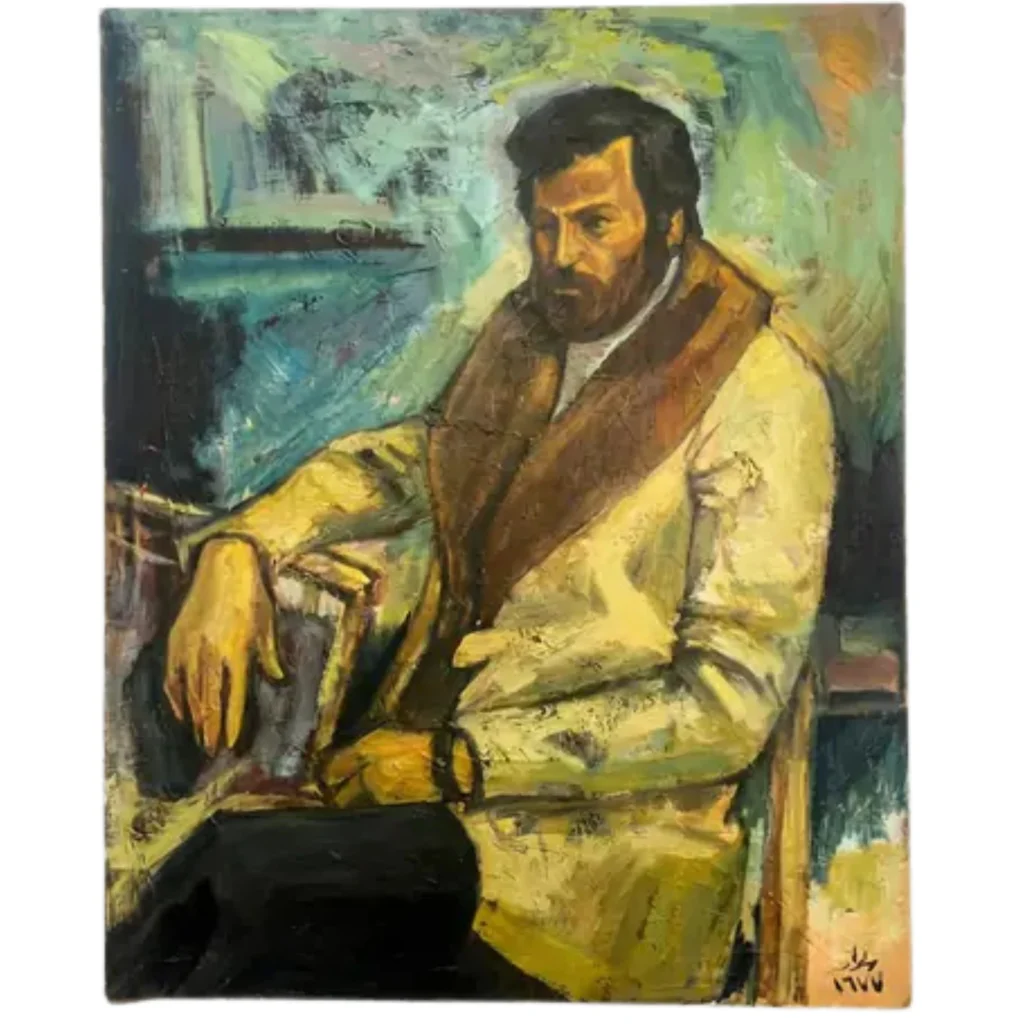
The artworks reproduced with the biography include paintings, sculptural ceramic forms and decorated pottery. Together, they demonstrate the range of materials within his practice. Where the original publication does not provide a clear individual title, this archive will avoid assigning one without additional documentary evidence.
Teaching and Palestinian handicrafts
Teaching was an important part of Bader’s professional life. His 1984 biography records that he worked as an art instructor at the Ramallah and Al-Bireh Women’s Training Centres between 1973 and 1981.
It also records his work in developing Palestinian handicrafts, specifically ceramics, pottery and glass, with the support of Birzeit Research Centre. These activities connected artistic practice with education, material knowledge and the development of local cultural production.
Bader’s contribution as an educator extended beyond the classroom. Workshops, exhibitions and cultural initiatives allowed artistic knowledge to circulate among students, artists and wider audiences.
Gallery 79 and cultural organization
In 1979, Bader founded Gallery 79 in Ramallah. The gallery became a venue for exhibitions and cultural activity during the early 1980s, providing a platform for Palestinian artists and audiences before its physical space was closed by the Israeli military authorities.
Gallery 79 was part of Bader’s wider commitment to building cultural infrastructure. Its activity connected exhibition-making with education, public discussion, documentation and publishing. The Gallery 79 name also appears in the publication details of Bader and Anani’s 1984 book, where it is recorded as the copyright holder.
This combination of artistic work and cultural organization is central to understanding Bader’s role. He was not only producing paintings and ceramics; he was also helping create the institutions and records through which Palestinian art could be presented and preserved.
Later years and legacy
Issam Bader continued working in painting and ceramics until his death in Ramallah in November 2003. His work remains represented through surviving artworks, institutional collections, exhibition records, publications and family archival material.
Interest in his practice continued after his death through memorial and group exhibitions in Palestine and abroad. These later presentations have introduced his work to new audiences and helped place it within broader accounts of modern and contemporary Palestinian art.
The Issam Bader legacy extends beyond the objects he created. It includes his work as a teacher, his involvement in professional artistic networks, the establishment of Gallery 79, and his contribution to documenting Palestinian visual culture.